
You know how group travel costs look simple until you add luggage, peak-time traffic, and two or three separate taxi bookings.
If you are comparing Minibus with taxis for a day out, weddings, or an airport transfer, the real question is usually this: how quickly do taxi fares multiply once you need more than one car.
This guide gives you a practical way to price it up for Kent, including Maidstone, and for nearby pick-ups that Kent operators often cover, such as Horsham in West Sussex.
We will compare the cost logic by group size, flag the extras that change the bill, and show you how to get quotes that are actually comparable.
When you price group transport properly, you are comparing one fixed booking against multiple meters. That is why kent minibus hire can look similar to one taxi at first, then suddenly become far cheaper once you need two vehicles, extra waiting time, or a second pick-up point.
The cleanest way to compare is to set one identical itinerary (same pickup time, same stops, same luggage) and then work out how many taxis you would realistically need, not how many you hope you can squeeze in.
To anchor your numbers, Maidstone Borough Council publishes maximum hackney carriage meter tariffs, including a Tariff 1 start fare of £3.80 for the first 495 metres and 20p per additional 105 metres (or per 20 seconds of waiting time), with higher tariffs for late nights and certain dates.
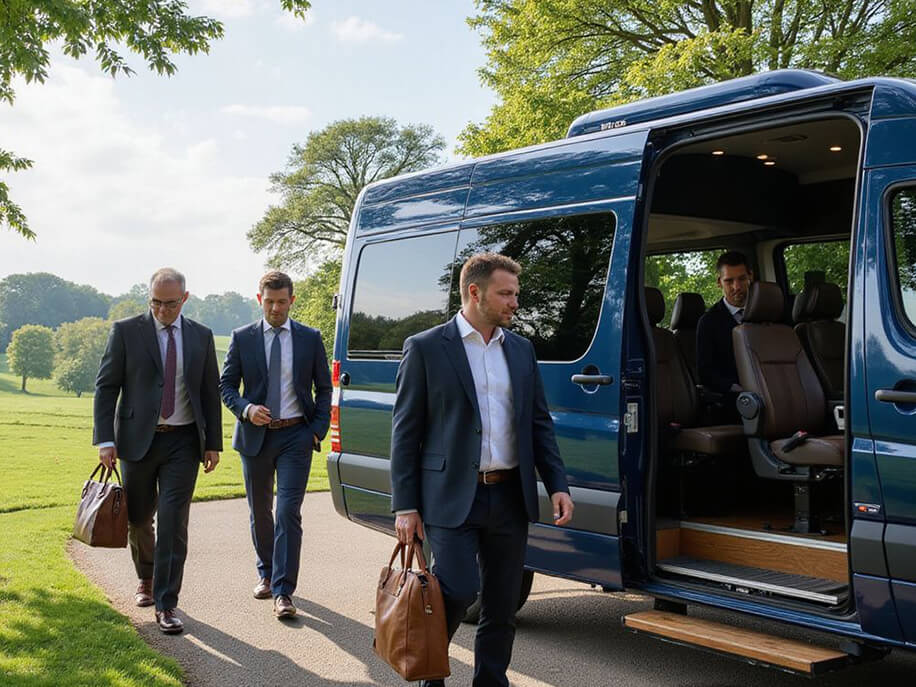
Use the table below as a decision guide, then pressure-test it with your real luggage and your real itinerary. The moment you need a second taxi, your costs usually jump more than people expect.
| Group Size | Taxis Needed | Taxis: What Typically Happens in Practice | Minibus Option | Cost Verdict |
|---|---|---|---|---|
| 1–2 passengers | 1 taxi | Easy booking, minimal coordination, usually the lowest total spend. | 9-seater is possible but you pay for spare seats. | Taxis are often cheaper. |
| 3–4 passengers | 1 taxi (sometimes 2) | If you have 3–4 suitcases, you may end up needing an estate or MPV, or a second vehicle. | 9-seater gives breathing room for bags and a calmer ride. | Minibus becomes competitive when luggage matters. |
| 5–6 passengers | 2 taxis | Split the group, double the base fares, and you can pay two sets of waiting time in traffic. | 9-seater keeps everyone together with one pickup time. | Minibus is usually cheaper than two taxis. |
| 7–9 passengers | 2–3 taxis | Coordination becomes the hidden cost: staggered arrivals, missed turns, and extra waiting. | 9-seater is designed for this exact use case. | Minibus is usually the most cost-effective choice. |
If you want a fast “sanity check” on a Maidstone-style meter, you can estimate a daytime Tariff 1 fare by distance: start with the initial £3.80, then add 20p per additional 105 metres. This is not a perfect quote because traffic converts into waiting-time charges, but it helps you spot when two taxis will obviously cost more than one minibus.
The most expensive surprises usually come from charges that sit outside the “base fare”, such as waiting time, charge zones, and airport drop-off fees. Taxis can be perfectly fair here, but you need to ask the right questions before the day.
Transport for London confirms that from 2 January 2026 the Congestion Charge increases to £18 per day, and that non-compliant light vehicles entering the ULEZ can pay a £12.50 daily charge. The Department for Transport also lists the Dartford Crossing charge for cars and minibuses with 9 or fewer seats as £3.50 for pay-as-you-go (with a lower price for account holders), which matters for Kent to Essex routes.
| Possible Charge | What to Expect | How a Reputable Provider Should Handle It |
|---|---|---|
| Waiting Time |
|
|
| Fuel Surcharge |
|
|
| Tolls and Charge Zones (ULEZ/Congestion) |
|
|
| Airport Drop-Off Fees and Parking |
|
|
| Luggage and Equipment |
|
|
| Cancellation and Amendment Fees |
|
|
| Overtime and Late Return |
|
|
If your group is staying together, a standard minibus or executive minibus often gives you the best balance of cost control and predictability. You are buying one schedule, one luggage plan, and one point of contact.
This matters most for weddings, school trips minibus & coach hire, corporate travel, and airport transfers, where a single delay can trigger a chain reaction of extra taxi costs.
If you are deciding between self-drive and a chauffeur service, be strict about licensing. UK Government guidance explains that driving a 9–16 passenger-seat minibus on a car licence only applies in limited circumstances (for example, not for “hire or reward”), so for paid group transport you will usually want a properly licensed driver included.

A 9-seater can feel like a small coach without the big-coach constraints, especially for Kent routes into Surrey, East Sussex, Essex, and Greater London.
For vehicles like the Vauxhall Vivaro Life, the manufacturer brochure shows how quickly luggage space changes with seating. In some layouts you have about 1.2–2.7 cubic metres of usable luggage space, and seats can be folded or removed to trade seats for bags.
If you are comparing minibus hire for group travels with taxis, check these practical comfort points before you book:
If you are travelling as a group, filling one vehicle is often the most efficient choice because you avoid duplicating the same miles across two or three cars.
The UK Government’s 2025 greenhouse gas conversion factors list scheduled coach travel at 27.76 gCO2e per passenger-kilometre, which is a useful benchmark for what “high occupancy” transport can achieve when it is well utilised.
| Mode (benchmark) | gCO2e per passenger-km | How to Use This in Planning |
|---|---|---|
| Coach | 27.76 | If your group fills most seats in one vehicle, you move closer to this efficiency range. |
| Local London bus | 68.75 | High-occupancy urban transport can still be efficient, especially when well loaded. |
| Average local bus | 103.85 | Lower occupancy pushes the number up, which is what happens when you split a group across several cars. |
There is also a direct cost angle. The Department for Transport’s transport and environment statistics note that, on an example long-distance journey, an average petrol car can emit more than four times the CO2e per passenger than an equivalent coach trip. You do not need to be running a sustainability project to benefit from that logic, it often tracks with fuel and per-person cost too.
For Kent routes that use the Dartford Crossing (for example, Tonbridge to Essex or Maidstone to Essex), one minibus can also reduce the number of separate crossing charges compared with two taxis. That is a small line item per vehicle, but it becomes meaningful once you scale it across return journeys and multiple days.
Taxis and private hire can be brilliant for small groups and short trips. The problem is that they scale awkwardly for group transport, especially with luggage and fixed arrival times.
You also lose the “one plan” advantage. For ripon races, race days, concerts, theme park minibus & coach hire days, or uk – europe minibus & coach hire style itineraries, you need everyone to arrive together. Two or three taxis can still work, but you are managing more moving parts and more chances for delays.
If you do choose taxis for a larger group, reduce the risk with three quick checks:
For most group travel, the cost tipping point is simple: once you would need more than one taxi, a 9-seater minibus starts to look like the safer financial choice.
A single booking keeps your group and luggage together, which is exactly what you want for weddings, airport transfers, and event transport across Kent, Surrey, and the wider South East.
If your priority is predictable pricing and fewer surprises, start your comparison with Minibus Hire Kent, then only switch to taxis if your group size and luggage genuinely fit into one vehicle.
Often, yes. For groups of six or more, minibus hire or events minibus & coach hire cuts the cost per person, especially for event transport and day trips.
Yes for large parties, luxury coaches lower the cost per head. They work well for festival minibus & coach hire and big events.
For a small group, taxis can be cheaper. For trips like children’s parties, day trips minibus & coach hire often wins on price and comfort.
Compare quotes from taxi providers, events minibus & coach hire and luxury coaches, then pick the lowest price that fits your stops. Book early, state group size, and check reviews.